Key Takeaways
- Each house parallels a real-world culture — Liberty (American), Bretonia (British), Kusari (Japanese), Rheinland (German), Border Worlds (frontier, no parallel)
- The cultural parallel shows in ship design, station aesthetics, police behavior, and criminal faction structure
- Every house has a lawful faction and an organized criminal counterpart; the tension between them drives the political economy
- The Border Worlds are ungoverned territory — the only way in is through jump holes or the right faction rep
- The best end-game ships and equipment are in Border World space
Table of Contents
Liberty
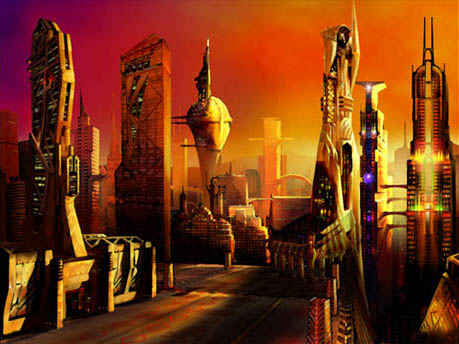
You start in Liberty. Manhattan station, New York system. The first thing you see is advertising. It's everywhere — screens cycling through consumer products, corporate slogans, trade lane availability announcements. Liberty is loud, wealthy, optimistic, and very convinced of its own exceptionalism.
The American parallel is not subtle. Liberty runs on corporate democracy: the government and the market are more or less the same entity. Ageira Technologies owns the jump gate network. Interspace Commerce runs the trade lanes. The Liberty Police Inc. is a private company — law enforcement as a for-profit service. The irony is built into the name, and the game knows it.
The ships reflect this. Liberty fighters are sleek, mass-produced, practical. They look like they came off a factory line for an export market. The Liberty Dreadnought, visible in the campaign, is enormous and bureaucratic-looking — a warship designed by committee.
The criminal ecosystem maps cleanly. The Lane Hackers were once Ageira employees, fired after discovering that Ageira's jump gate monopoly was built on suppressed competing technology. They are ideological criminals — they steal from the corporation that wronged them and consider themselves right about it. The Liberty Rogues are opportunistic pirates without ideology. The Xenos are violent nativists who hate foreign-born citizens; they are despised by other criminal factions as well as the police.
| Key Systems | New York, California, Texas, Colorado |
| Lawful Faction | Liberty Navy / Liberty Police Inc. |
| Criminal Counterpart | Lane Hackers, Liberty Rogues |
| Best Reason to Visit | Starting location; dense early game content; Liberty Dreadnoughts worth finding late-game |
Bretonia
Bretonia is Britain after the empire ran out of steam. Industrial north, academic south, a government that talks about tradition while its economy slowly hollows out. Leeds is a mining and manufacturing system — gritty, functional, resource-focused. Cambridge is research and education, Planetform's headquarters, cleaner and more polished. The class tension between them is baked in.
The British parallel shows in the criminal factions. The Mollys are fighters for the people of Leeds, framed as resistance but operating as pirates — the Irish Republican Army comparison is close enough to be intentional. Their political grievance is real: Bretonia's corporate interests have extracted wealth from the working systems while the workers saw little of it. The Gaians are eco-terrorists opposing terraforming, which Bretonia does aggressively to expand its habitable planets. Both factions have sympathetic origins and violent methods.
Bretonia's military is present but not aggressive in the way Liberty's police is. The Bretonian Armed Forces patrol efficiently and without the shoot-first attitude that Liberty Police Inc. sometimes displays. The Bretonian Police Authority is understaffed and stretched.
For players, Bretonia is the gateway west. The Omega systems — border world space with some of the best ships in the game — connect through Edinburgh and the Bretonian border. Getting to the Sabre means going through Bretonia first.
| Key Systems | Leeds, Cambridge, Manchester, Edinburgh |
| Lawful Faction | Bretonian Armed Forces / Bretonian Police Authority |
| Criminal Counterpart | Mollys, Gaians |
| Best Reason to Visit | Access to Omega border worlds; mid-game equipment; story missions |
Kusari
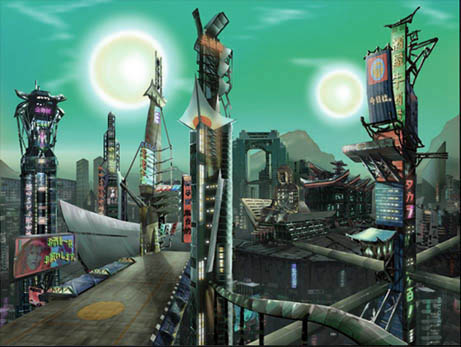
Kusari is Japan in space, and the design commits to this fully. The stations have a visual aesthetic distinct from any other house — clean geometry, specific color palette, different lighting. The music in Kusari systems is distinct: something Eastern-influenced, a melodic palette that doesn't match Liberty's corporate sheen or Rheinland's brass militarism. The ships are fast and elegant, often red-accented, built for agility over brute force.
The corporate feudalism parallel holds through the faction structure. Kusari is nominally governed by the state, but the major corporations — Kishiro Technologies, Samura Industries — hold real power and are in constant commercial conflict with each other. The state navigates between them. The Hogosha are the criminal arm of this arrangement: organized crime tolerated and occasionally used by the corporate structure, serving a function not unlike historical yakuza.
The Blood Dragons are the more interesting criminal faction. They are honor-bound fighters whose lineage traces back to a military coup generations ago — the losing side, still fighting. The comparison to the 47 Ronin is deliberate. They are criminals by legal definition and something else by the game's framing. The Golden Chrysanthemums — a feminist separatist organization reacting to Kusari's patriarchal corporate culture — are one of the most unusual criminal factions in any game of this era and are handled with more seriousness than the genre typically extends to this kind of faction.
Kusari access to the Sigma systems — gas mining territory between Kusari and Rheinland — is strategically valuable for traders. The Sigma systems have high-value goods and, deeper in, some of the best mid-game equipment.
| Key Systems | New Tokyo, Kyushu, Shikoku, Sigma-13 |
| Lawful Faction | Kusari Naval Forces / Kusari State Police |
| Criminal Counterpart | Blood Dragons, Golden Chrysanthemums, Hogosha |
| Best Reason to Visit | Kusari-specific ships and equipment; Sigma system access; unique faction lore |
Rheinland
Enter Rheinland space and something feels off.
The military patrols are more aggressive than Bretonian or Kusari counterparts. The political posture toward the other houses is tense. The campaign eventually explains why — it's one of the better narrative payoffs in Freelancer, and this article won't spoil it. But the tension is palpable from the moment you cross the border, before the story shows you its hand.
Rheinland is Germany: engineering precision, military pride, and an aggressive posture that has historical roots the game explores carefully. The ships are heavier, militaristic, built for sustained conflict rather than fast maneuvering. The stations are functional and fortress-like.
The criminal ecosystem is entirely political. The Red Hessians are revolutionary fighters opposing corporate power — their name borrows from the mercenaries of the American Revolutionary War and their politics are explicitly anti-capitalist. The Unioners are displaced industrial workers turned pirates after Rheinland's corporate restructuring eliminated their livelihoods. The Bundschuh are an underground democracy movement. These are not random pirates — they are people with specific grievances, and the game presents all three with enough specificity that they feel like a society rather than a faction list.
Rheinland's military equipment — sold in Stuttgart and Frankfurt systems — is among the best available before reaching the border worlds.
| Key Systems | New Berlin, Stuttgart, Frankfurt, Hamburg |
| Lawful Faction | Rheinland Military / Rheinland Police |
| Criminal Counterpart | Red Hessians, Unioners, Bundschuh |
| Best Reason to Visit | Military-grade equipment; campaign story; access to Hamburg and the border |
Border Worlds / Independent Space
The Border Worlds are where the cultural parallel breaks down. There is no single people here, no founding ship, no house government, no police force maintaining order. The Omega, Sigma, Tau, and Omicron systems are everything that falls between the cracks of civilization.
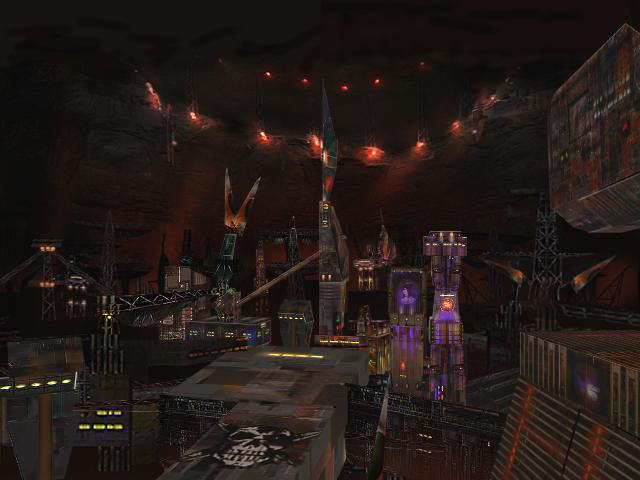
The Corsairs are based in the Omicron systems — specifically Omicron Gamma. Mediterranean-coded, intensely territorial, and in permanent conflict with the Outcasts, the Corsairs are the dominant military power of the deep border worlds. They have some of the best ships in the game — the Titan, particularly. Getting there requires crossing a lot of dangerous space and building the right reputation.
The Outcasts hold Malta and the surrounding Omicron systems. They are the survivors of the Hispania — the fifth Sleeper Ship that was lost. Their story is the most tragic in the game, and it's covered in the Sleeper Ships article. They control Cardamine production, the sector's most valuable contraband. Their criminal empire is built on the substance that their own bodies require.
The Zoners are neutral settlers who occupy Freeport stations throughout the border worlds. They will trade with anyone, require no political alignment, and represent the only truly safe docking in ungoverned space. Freeport 9 is a significant location — the Eagle VHF is sold there.
The Order is a secret organization with a specific purpose the campaign reveals. Their bases are in the deepest Omicron systems. Getting to them requires following the story or knowing where to look.
For players, the Border Worlds are the end-game. The best Very Heavy Fighters — Sabre, Eagle, Titan, Anubis — are all here. The highest-paying contraband runs run from Malta outward. The rarest equipment sits in Corsair and Outcast bases.
None of this is on the main trade lane network. All of it requires jump holes, specific faction reputation, and the willingness to fly through space where nobody is coming to help you.
| Key Systems | Omega-3/7/11, Omicron Alpha/Gamma/Minor, Tau-23/29/37 |
| Major Factions | Corsairs, Outcasts, Zoners, The Order |
| Lawful Presence | None (Order in specific systems) |
| Best Reason to Visit | End-game ships (Sabre, Eagle, Titan, Anubis); highest contraband values; Nomad lore |
FAQ
Sources
- Freelancer game files — faction and system data (community documentation)
- The Starport — faction reputation documentation: https://the-starport.com
- Freelancer Wiki (community documentation)
- In-game bartender and NPC dialogue (primary source for faction lore)