Key Takeaways
- Freelancer is a 2003 PC space trading and combat game by Digital Anvil, published by Microsoft Game Studios
- It uses mouse-flight controls — no joystick needed — which made it accessible to players who had never touched a space sim
- The game has a 48-mission story campaign, a trading economy, and faction reputation system
- Multiplayer servers still run through community patches, more than two decades after official support ended
- The game is not available on any digital storefront — physical copies are the only purchase option
What Freelancer Actually Is
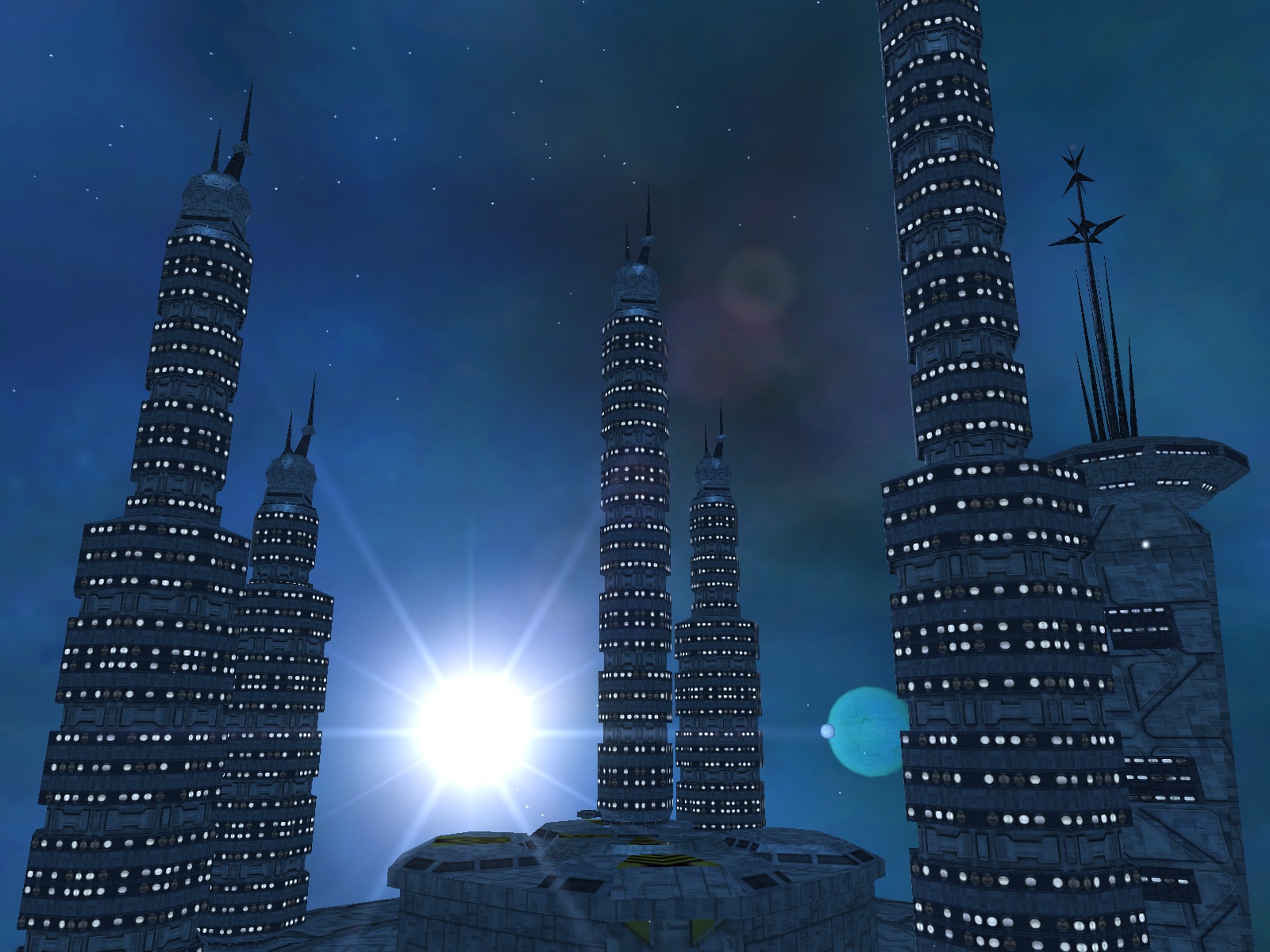
Edison Trent wakes up in a bar with nothing. His ship is gone. His money is gone. The station he was visiting just got destroyed, and he barely got out. Now he's on Manhattan — the starting station in the Liberty house — with enough credits to buy one drink and a world of trouble ahead.
That's where the game begins. And within ten minutes you're undocked and flying.
Freelancer is a space trading and combat game. The short version: you fly a spaceship, you trade goods between stations, you fight — or avoid — other ships, and you follow a story that takes you across five political powers in a sector of space eight hundred years from Earth. You upgrade your ship. You build a reputation with factions. You explore.
The longer version is that Freelancer is unusual in how accessible it is. Space sims in 2003 ranged from the approachable — arcade shooters, mostly — to the brutally demanding. The X series required hours of tutorial and careful attention to economy meters before you could do much of anything. Elite was a point of pride for its depth and a warning about its learning curve. Freelancer sat deliberately between these extremes. It had simulation-level complexity in its world — real factions, a real economy, real political consequences — but it controlled like an action game. You flew with a mouse. You pointed at things and shot them. The sector was yours to explore within hours of starting.
That combination — real world, accessible controls — is what the community still talks about twenty-three years later.
The Setting
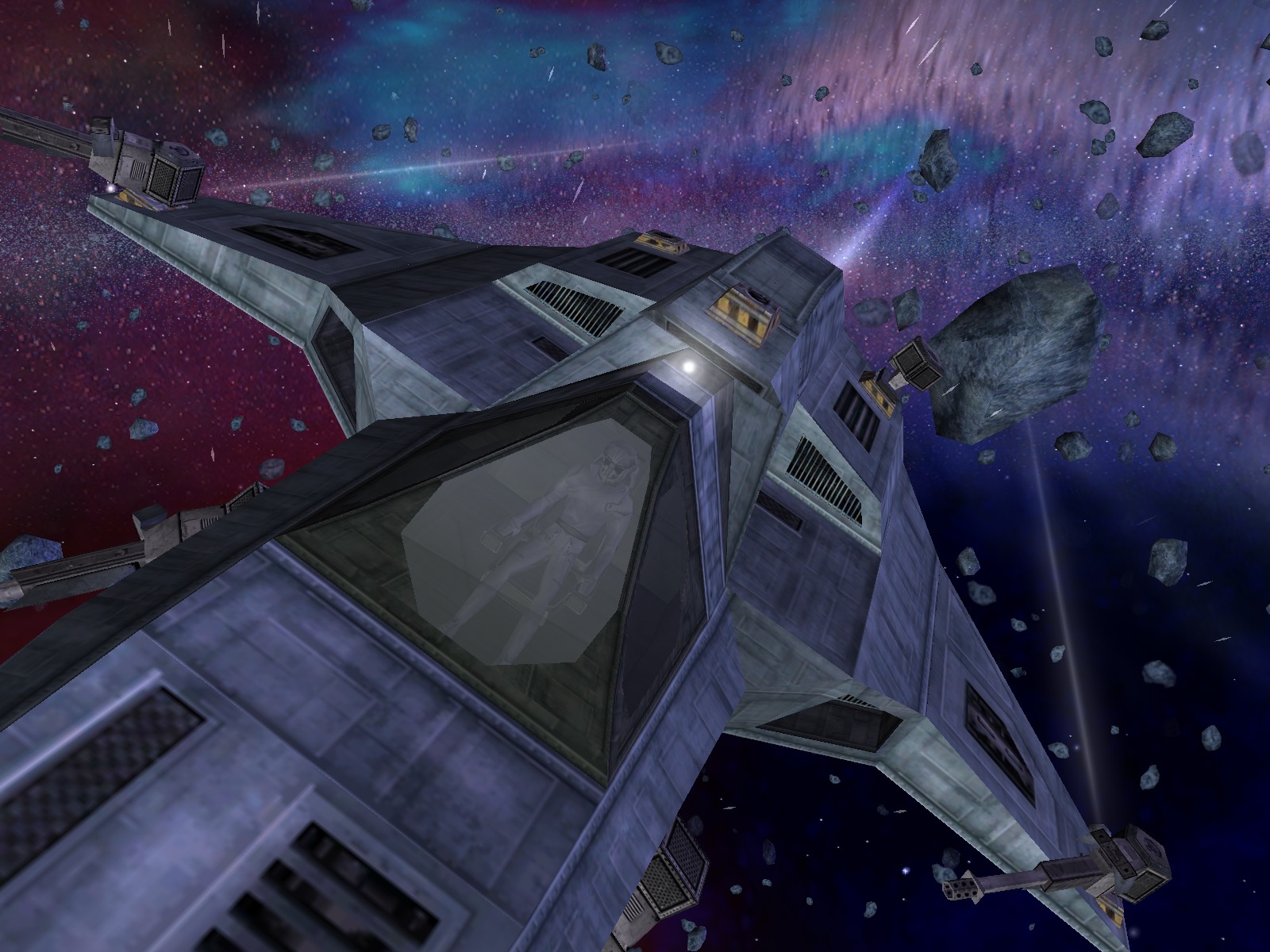
You are in the Sirius Sector, 800 years after a dying Earth launched five colony ships toward the stars. Those ships — each carrying the seeds of a civilization — completed the journey and founded five houses: Liberty, Bretonia, Kusari, Rheinland, and the lost fifth, whose survivors became the Outcasts of the border worlds.
Edison Trent is a freelancer — a contractor, essentially. He takes jobs, trades goods, runs missions. He's not noble born, not a soldier, not a special agent. He's competent and alive, which is more than most. The campaign pulls him into something bigger than a trade run, but the game never forgets what he is.
That's enough setting for now. The Universe Guide has the full picture.
The Core Loop
Twenty minutes in Sirius
You undock from Manhattan. The trade board shows consumer goods are selling well in Pittsburgh. You load your cargo hold, hit the trade lane autopilot, and watch New York fall away behind you. Halfway to Colorado, a Lane Hacker patrol drops in on you. They want your cargo. You have options: fight, boost away, or dump the cargo and let them have it. You fight. The controls are responsive, the fight is over in ninety seconds, and you land in Pittsburgh with a profit and a slightly dented hull. Check the job board. Take a mission. Undock again. That's the loop.
The game gives you four things to do and lets you do them in any proportion.
Trade. Goods move between stations at different prices. Buy low in one system, sell high in another. Some goods are contraband — illegal in house space, worth more in criminal markets. You decide how much risk you want to carry.
Fight. Combat is where the controls shine. Point at the target, throttle up, manage your shields and power plant. Faction kills raise your rep with some factions and lower it with others. The economy of consequence is real — kill too many Liberty Police and you lose docking rights in Liberty space.
Explore. Most of the sector is off the campaign path. The border worlds — the Omega, Sigma, Tau, and Omicron systems — are lawless frontier space reachable only through unmapped jump holes. The best ships in the game are out there. So is the best lore.
Follow the story. The campaign runs 48 missions. It has a beginning, a middle, and an end. It takes Trent from Manhattan to places the trade lanes don't reach. You can play it linearly or mix it with free play — the game doesn't force a pace.
These four loops reinforce each other. Trade funds better ships. Better ships open more of the map. More of the map means more missions. Story missions open factions and access. Access opens more trade routes. Simple as that.
Mouse Flight — Why It Mattered
In 2003, space combat games had a joystick problem.
Most sims assumed joystick input. Their control schemes were designed around analog stick movement and hat switches. Playing them with a mouse and keyboard was technically possible and often miserable. The genre had self-selected for a hardware-owning audience — if you didn't have a HOTAS setup, certain games simply weren't for you.
Freelancer made mouse flight the default and designed the game around it. Your ship follows your cursor. You throttle with the scroll wheel or keyboard. Your weapons fire on mouse-click. The ship tracks what you point at, and combat becomes about reading an opponent's movement and intersecting their path — not about mastering a flight model.
"We wanted Freelancer to be something that anyone could sit down and play without a manual."
— Phil Watanabe, lead developer, cited in contemporary 2003 press coverage
This was the right call. Freelancer's critical reception noted repeatedly that it was the most accessible space sim of its era. Players who had never touched the genre found themselves in dogfights within minutes of starting.
The controls have not been perfectly replicated since. Not because the idea is hard — it isn't — but because most modern space sims target dedicated sim audiences who want HOTAS support and Newtonian flight models. The "mouse-flight for everyone" philosophy requires design commitment that most games don't make.
The Campaign
Forty-eight missions. That sounds thin compared to modern open-world games, but Freelancer's campaign is tight and purposeful. Each mission advances the plot. The story moves from Liberty politics through the other houses and into something that reframes everything you've seen about the Sirius sector.
The story delivers its lore through three channels. The campaign missions give you the main narrative. The bar NPCs and bartenders deliver the background — faction politics, hidden locations, the history of the houses. And exploration delivers the rest: derelict ships with salvage logs, hidden bases with unique dialogue, systems that the campaign never requires you to visit but reward you for finding.
The campaign runs 10-15 hours depending on pace. That's not the whole game. That's the spine. The rest is yours.
Multiplayer — Still Running
Freelancer shipped with multiplayer. You could join player-run servers, trade and fight in shared space, build rep and credits alongside other players. It was not an MMO — the servers were relatively small and player-hosted — but it worked, and communities built around it.
Microsoft shut down the official master server sometime in the mid-2000s. The list of available servers disappeared. For most online games, that's the end.
Community developers wrote a patch that restored server browsing by redirecting the query to a community-maintained replacement. Discovery Freelancer — the largest Freelancer multiplayer mod — became effectively its own MMO, continuously updated since 2003. As of 2026, servers still run. Players still fly.
That's not a small thing. The multiplayer outlasted the publisher by fifteen-plus years.
Seamless Systems — The Tech No One Talks About
Inside a system, Freelancer has no loading screens. You undock from Manhattan, fly across the New York system, dock at a mining station — continuous movement, no interruption. This sounds basic now. In 2003, it wasn't.
The system streaming technology meant that as you flew, the game was loading and unloading content in the background. The result was a sector that felt like it existed whether you were looking at it or not. You could fly from the station to a debris field to a jump gate and never leave the experience.
Loading screens exist between systems — jumping through a gate to reach another system takes a loading break. But within a system, the world is continuous.
This is why the sector felt alive. The technology made the setting feel real in a way that menu-based travel never could.
Is It Worth Playing in 2026?
Yes. With a caveat.
The caveat is setup. The game is not on any digital storefront. Getting it requires finding a physical disc — eBay, retro game shops, the usual. Once you have it, it needs a few patches before it runs properly on modern hardware: a widescreen fix, an FPS uncapper, and a GPU compatibility wrapper. The install guide has the full process step by step.
Once it's running, the game holds up. The controls are still responsive. The sector still feels designed. The campaign still tells a real story. The mods — particularly HD Edition, which adds widescreen support and upscaled textures — make it look better than it did in 2003.
No, it does not have achievements. No, it does not have cloud saves. No, there is no quick match or season pass or microtransaction. It's a 2003 PC game, and it does what a 2003 PC game does.
It also does things that no game in 2026 does in quite the same way. That's why you're reading this.
FAQ
Sources
- GameSpy review of Freelancer, 2003: archived
- GameSpot review: archived
- IGN review, March 2003 (archived via Wayback Machine)
- MobyGames — Freelancer credits: https://www.mobygames.com/game/7695/freelancer/
- Metacritic, Freelancer (PC): https://www.metacritic.com/game/freelancer/